
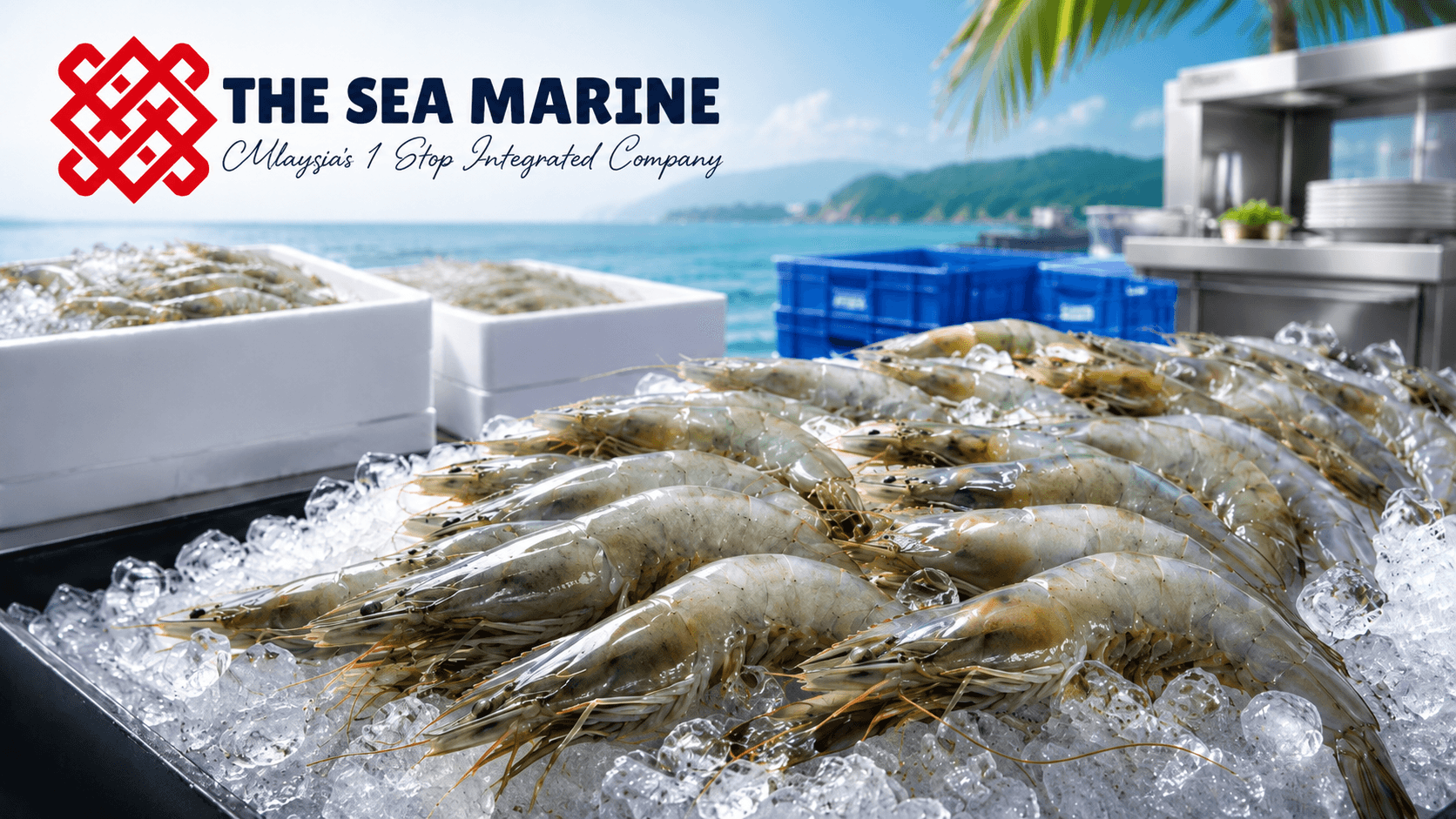
Vannamei Prawns for Wholesale and Food-Service Markets
Vannamei prawns are widely used across wholesale, restaurant, catering and food-service channels because buyers can specify the product by size count, preparation, freezing method, glazing, net weight and pack format. The commercial result depends on agreeing those details before production.
What are vannamei prawns?
Vannamei is the common trade name for Pacific white shrimp or whiteleg shrimp. Technical and official references may use Penaeus vannamei or Litopenaeus vannamei. International buyers should state the scientific species name in product specifications to reduce confusion caused by different common names.
For commercial orders, the species name alone is not enough. Buyers should also define the required product form, count size, raw or cooked status, shell condition, freezing method, glazing, net weight and packaging.
Why vannamei works across wholesale and food-service channels
The main commercial advantage is specification flexibility. Different channels can select a format that matches kitchen labour, menu use, serving size, storage space and target cost.
Size-count planning
Count sizes help buyers plan portions, presentation and purchasing comparisons. The counting basis and tolerance should be stated clearly.
Preparation options
Shell-on, peeled, deveined and tail-on options allow food-service operators to balance appearance, preparation time and yield.
Pack formats
Bulk cartons, food-service packs and retail-ready formats can serve distributors, restaurants, caterers and private-label programmes.
Common vannamei prawn formats
Industry abbreviations are useful, but the full preparation must still be written into the approved specification. Names can be interpreted differently between suppliers and markets.
Head-On, Shell-On
A whole-prawn presentation commonly considered for display, grilling, hotpot and markets where head-on products are preferred.
Headless, Shell-On
Removes the head while keeping the shell, supporting flavour, visual presentation and handling flexibility.
Peeled, Undeveined
A peeled format suited to buyers that want reduced kitchen preparation but do not require deveining.
Peeled, Deveined
A convenience format commonly assessed for restaurants, catering, ready-meal production and central kitchens.
Peeled, Tail-On
Keeps the tail for presentation while reducing peeling work. The deveining and cut details should be confirmed.
Buyer-Specified Preparation
Butterflied, skewered, cooked or other value-added formats may be evaluated subject to actual processing capability and order scope.
What buyers should confirm before requesting a quotation
Two quotations cannot be compared fairly unless the commercial specifications match. The following fields should be agreed in writing.
| Specification field | What to confirm | Why it matters |
|---|---|---|
| Species | Common and scientific name | Reduces substitution and labelling ambiguity. |
| Product form | Head, shell, peeling, deveining and tail condition | Changes labour, yield, appearance and price. |
| Count size | Counting unit, grading range and tolerance | Controls portion size and menu presentation. |
| Freezing format | IQF, block frozen or another agreed method | Affects handling, separation and kitchen usage. |
| Glazing | Declared glazing and net product weight | Prevents incorrect price-per-kilogram comparison. |
| Packaging | Inner pack, master carton, label and private-label details | Must fit storage, distribution and market requirements. |
| Traceability | Lot, processing, source and applicable certificate records | Supports verification and issue investigation. |
| Destination | Country, importer and required regulatory documents | Market access and labelling rules are destination-specific. |
- Required order quantity and expected delivery period.
- Raw, partially cooked or fully cooked status.
- Additives or treatments, where applicable and permitted.
- Storage temperature and shelf-life requirement.
- Microbiological or chemical criteria requested by the buyer.
- Inspection, sampling and claims procedure.
Malaysian controls and international reference standards
Compliance is determined by the actual farm, facility, product, process and destination. A general article cannot replace current legal, certification or importer-specific requirements.
Department of Fisheries Malaysia
Malaysia publishes myGAP certification information and codes of good aquaculture practice for marine shrimp farming and hatchery operations. Certification must be checked against the named operator, premises, scope and validity period.
View official aquaculture codes ↗Malaysia Food Hygiene Regulations
Food premises and food handling activities in Malaysia are subject to applicable hygiene requirements. The 2009 regulations should be read with current amendments and official guidance.
View Ministry of Health references ↗Codex CXS 92-1981
The Codex standard covers quick-frozen raw, partially cooked or fully cooked shrimps and prawns, whether peeled or unpeeled. It addresses product identity, essential composition, hygiene, labelling and quality.
View Codex prawn standard ↗Destination-Market Requirements
Import eligibility, establishment approval, permitted treatments, residue limits, health certificates, labels and documentary controls vary by country and product. They must be confirmed before production.
Review export support →Matching the product to the sales channel
The correct specification depends on how the buyer stores, distributes, prepares and serves the product.
Flexible downstream supply
Distributors may prioritise recognised count sizes, strong carton identification and pack formats suitable for resale to multiple clients.
- Clear size and net-weight declaration
- Stable master-carton configuration
- Batch and cold-storage visibility
Portion and presentation control
Food-service buyers often compare kitchen labour, serving appearance, thawing convenience and usable yield rather than carton price alone.
- Menu-appropriate count size
- Shell and tail configuration
- Consistent portion planning
Preparation efficiency
Peeled or deveined formats may reduce preparation steps when the specification, cooking process and target cost support them.
- Labour-saving preparation
- Pack sizes matched to production runs
- Documented thawing and handling controls
Price should be compared against usable product—not only carton weight
A lower quoted price may reflect a different count size, product form, glazing level, net weight, preparation or packaging. Buyers should compare equivalent written specifications and evaluate how much usable product reaches the kitchen or final customer.
The Sea Marine can review an enquiry based on the buyer’s requested species, preparation, size, quantity, packaging, destination and documentation. Availability remains subject to current production and the applicable product, facility and certification scope.
Explore our seafood product solutions , processing capabilities and quality and traceability approach .
Related seafood buyer resources
Frequently asked questions
What is the difference between vannamei prawns and whiteleg shrimp?
They generally refer to the same commercially farmed species. Common names differ between countries, so the written product specification should include the scientific species name.
Which vannamei product form is best for restaurants?
There is no single best format. The choice depends on menu presentation, kitchen labour, usable yield, preparation process, target cost and serving size.
Why does glazing need to be confirmed?
Glazing can help protect frozen product from dehydration, but buyers must understand the declared net product weight so quotations are compared on an equivalent basis.
Can one specification be used for every export market?
No. Species eligibility, treatments, residues, labelling, health certification and establishment requirements may differ by destination and importer.
What information should be included in an enquiry?
State the species, product form, count size, quantity, glazing or net-weight requirement, pack format, destination, required certification and expected delivery period.
Sources used for this buyer guide
Check the latest official version and the requirements applicable to the specific product, premises and destination before contracting or shipment.