
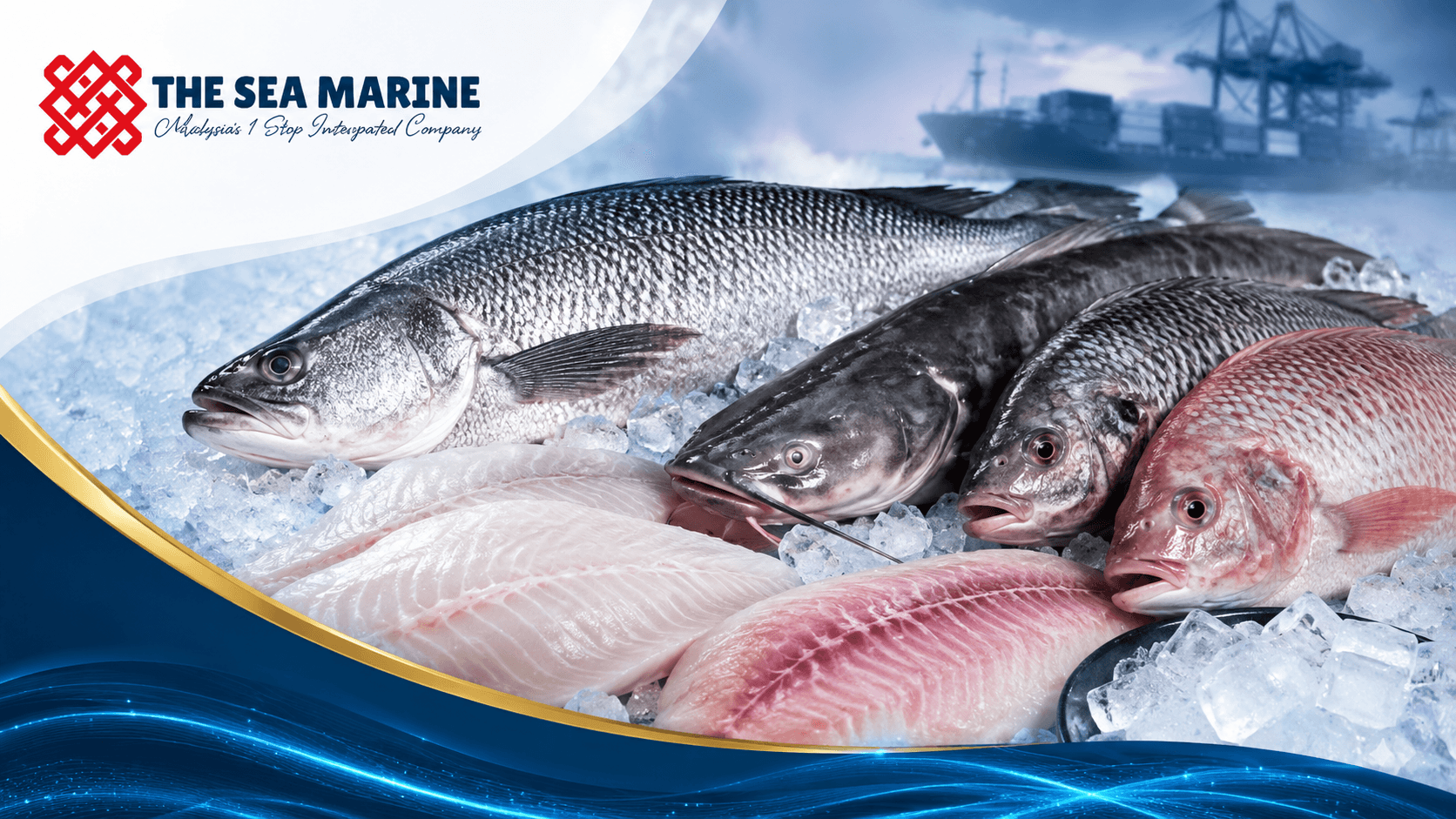
Frozen Fish Product Specifications Explained
A frozen fish quotation becomes commercially useful only when the species, preparation, size grade, freezing format, glazing, net weight, packaging, storage, traceability and destination requirements are clearly defined. This guide explains what Malaysian and international buyers should agree before comparing prices or confirming production.
What is a frozen fish product specification?
A product specification is the written agreement that defines what the supplier is expected to produce and what the buyer is purchasing. It should be clear enough for farming, processing, packing, quality, logistics and receiving teams to interpret the order consistently.
“Frozen fish”, “frozen barramundi” or “tilapia fillet” is not sufficient. The same species may be supplied whole, gutted, headed-and-gutted, as fillets, steaks or portions, with different size, skin, bone, glazing, packaging and yield requirements.
Specifications protect both buyer and supplier
Equivalent price comparison
Species, cut, size, glaze and net weight must match before quotations can be compared fairly.
Clear processing instructions
The approved document guides receiving, grading, cutting, packing, labelling and final inspection.
Objective acceptance criteria
Agreed tolerances and inspection methods reduce disputes based on assumptions or different terminology.
Use the common name and scientific name
Common fish names differ between Malaysia and overseas markets. A buyer-ready specification should state the accepted commercial name with the scientific name, plus farmed or wild origin where relevant.
The Sea Marine’s current catalog highlights the following fish categories. Exact frozen form, size, treatment, certification and packaging remain subject to the approved quotation.
Barramundi / Asian Seabass
Lates calcariferMay be commercially specified by whole-fish weight, preparation style, fillet format, skin condition, bone condition and pack configuration—subject to availability.
Tilapia
Oreochromis niloticusMay be specified as whole fish, prepared fish, fillets or portions depending on the actual processing offer and buyer requirements.
Define exactly how the fish is prepared
Product terminology should be expanded into a complete description. Availability depends on species, size and confirmed processing capability.
Whole Round
Whole fish with head and viscera present. Define scale, washing, size grading and presentation.
Gutted / Eviscerated
Viscera removed, with head retained or removed as specified. Define cleaning and trimming.
Fillets
State skin-on or skinless, pin-bone condition, trimming standard and individual weight range.
Portions
Define target piece weight, shape, thickness, cut location, skin, bones and tolerance.
Steaks / Cross-Cuts
State thickness, piece weight, bone condition and appearance standard.
Buyer-Specified Format
Custom cuts or retail packs require technical feasibility and MOQ confirmation.
State the unit, range and tolerance
“Small”, “medium” and “large” are not precise enough. State how the product is measured and what deviation is accepted.
Whole Fish
Usually stated in grams or kilograms per fish, with an agreed range and out-of-range tolerance.
Fillets
Usually stated in grams per fillet or a weight band, together with skin and trim conditions.
Portions
Define target weight, tolerance, pieces per pack and fixed- or random-weight packing.
Separate freezing method, glazing and net weight
Frozen fish may be individually quick frozen, block frozen or packed using another agreed format. The method changes separation, thawing and handling.
Glazing is a protective ice layer used to reduce dehydration and oxidation. Under Codex CXS 190-1995, the declared net contents of glazed quick-frozen fish fillets exclude the glaze, and covered products are labelled for storage at −18°C or colder.
| Field | What to state | Risk if omitted |
|---|---|---|
| Freezing format | IQF, block or another approved method | Different thawing and handling performance |
| Glazing | Glazed or unglazed and declared method | Incorrect fish-content comparison |
| Net weight | Fish weight excluding packaging and applicable glaze | Delivered-quantity disputes |
| Inner pack | Bag, vacuum pack, liner, tray or retail format | Unsuitable distribution format |
| Master carton | Units, carton net weight and dimensions | Pallet and warehouse mismatch |
| Storage | Required frozen transport and storage condition | Cold-chain and shelf-life risk |
Malaysian requirements and Codex references
Specifications support compliance but do not replace legislation, certification scope or destination-country rules.
Malaysia Food Regulations 1985
Malaysia’s regulations establish food standards and labelling requirements. Assess product names, ingredients, additives, net contents, dates and declarations against the current rules.
View MOH regulations ↗Malaysia Food Labelling Guidance
The Ministry of Health publishes labelling guidance and offers label review. Review the actual product, language, destination and sales channel.
View official guidance ↗Codex CXS 190-1995
The standard for quick-frozen fish fillets covers definition, freezing, presentation, glazing water, hygiene, labelling, net contents and storage.
View the fillet standard ↗Codex CXS 36-1981
This standard addresses quick-frozen finfish supplied uneviscerated or eviscerated and is relevant to whole or prepared fish.
View the whole-fish standard ↗Codex CXC 52-2003
The fish and fishery-products code covers aquaculture, receiving, processing, freezing, storage, distribution and HACCP-based control.
View the Codex code ↗Department of Fisheries Malaysia
DOF publishes codes for marine and freshwater finfish farming. Certification must be verified against the exact operator and premises.
View aquaculture codes ↗Avoid one generic laboratory specification for every fish
Acceptance criteria depend on species, source, product form, processing, destination and buyer programme. Relevant fields may include sensory condition, parasites, bones, defects, decomposition, microbiological hazards, residues, contaminants, additives and packaging integrity.
Codex histamine provisions for quick-frozen fillets apply to identified fish families associated with that hazard—not to every frozen fish.
- Common and scientific species name
- Farmed or wild origin
- Product form and trim description
- Skin, scale and bone condition
- Weight grade and tolerance
- IQF, block or other presentation
- Glaze declaration and fish net weight
- Ingredients, additives or treatments
- Inner pack and master carton
- Storage and shelf-life conditions
- Lot identification and traceability
- Inspection and claims procedure
- Certificate holder and certified site
- Destination documents and label rules
Minimum information for a frozen fish quotation
| Field | Buyer entry | Required level of detail |
|---|---|---|
| Species | Common and scientific name | Barramundi / Lates calcarifer |
| Product form | Complete preparation | Example: skin-on fillet; bone condition to be agreed |
| Size | Weight range and tolerance | Use grams per piece, not “medium” only |
| Frozen format | Required presentation | IQF or block, subject to confirmation |
| Glaze / net weight | Declared requirement | State fish net weight excluding applicable glaze |
| Packaging | Inner pack and carton | Food-service, bulk or retail-ready |
| Destination | Country and importer | Required health, origin and label documents |
| Commercial terms | Quantity and delivery | MOQ, shipment period, Incoterm and payment |
Related seafood buyer resources
Frequently asked questions
What is the most important field in a frozen fish specification?
No single field is sufficient. Species, form, size, frozen presentation, glaze, net weight and packaging work together.
Does “boneless” mean absolutely no bones?
The term should be linked to an agreed processing and inspection definition. Codex allows fillets to be presented as boneless when boning, including pin-bone removal, has been completed.
Is IQF always better than block frozen fish?
No. IQF supports individual-piece handling, while block formats may suit bulk or industrial uses. The correct choice depends on storage, thawing, processing and cost.
Should glaze be included in fish net weight?
For products covered by CXS 190-1995, declared net contents of glazed fillets exclude the glaze. The destination’s legal rules must also be followed.
Can one label be used for Malaysia and every export country?
No. Language, name, ingredients, allergens, net contents, origin, dates, storage and importer details may differ.
What should I send for a quotation?
Send species, form, size, quantity, frozen format, glaze or net weight, packaging, destination, certification and shipment period.
Sources used for this guide
Review the current official version and requirements for the exact product, premises, destination and shipment.