
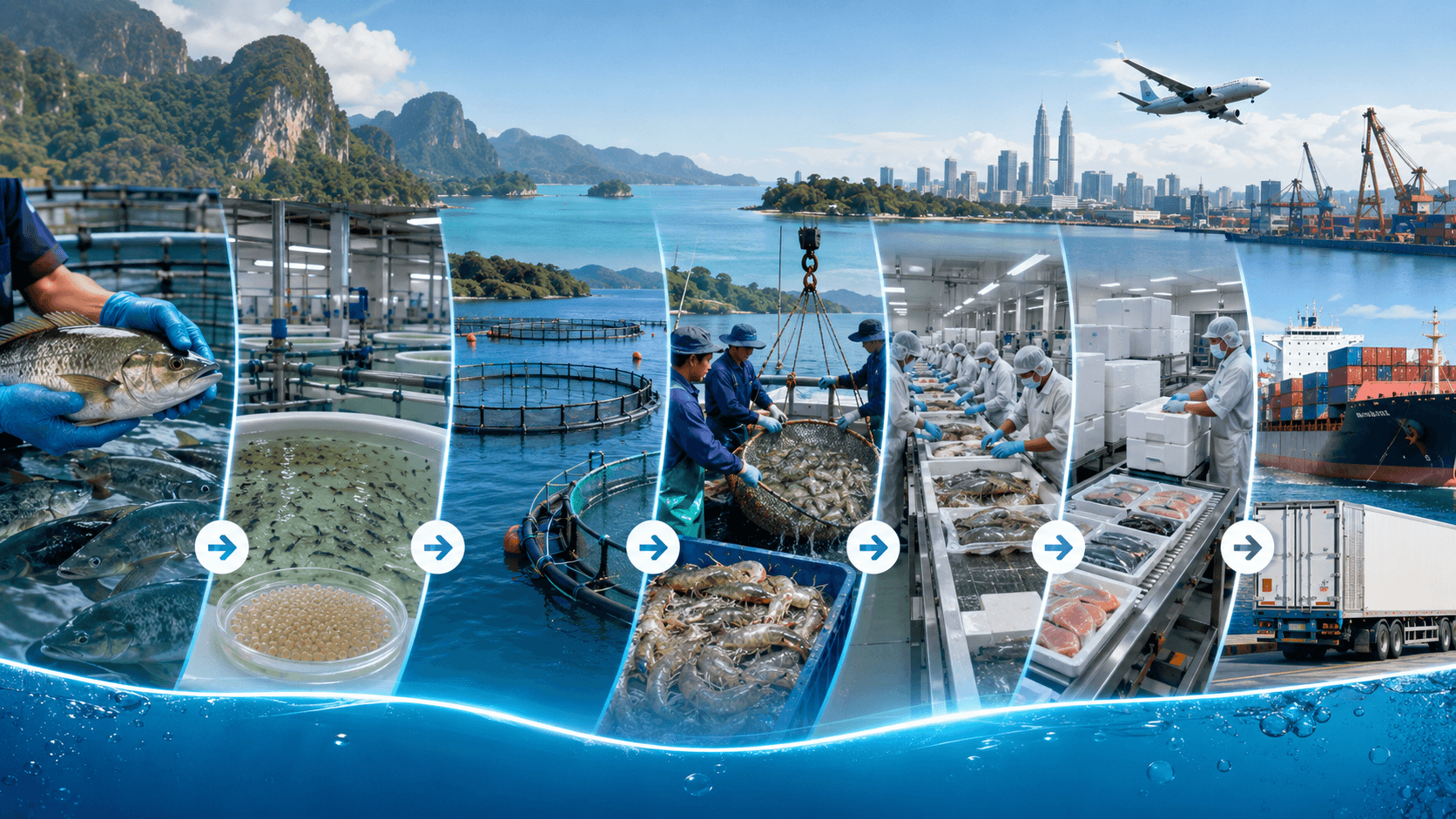
From Hatchery to Export: The Sea Marine’s Integrated Aquaculture and Seafood Supply Chain
An integrated seafood supply chain connects broodstock, hatchery support, farm inputs, grow-out production, harvesting, processing, packaging and export preparation. Here is how The Sea Marine’s group ecosystem is structured—and what Malaysian and international buyers should verify at every stage.
What an integrated aquaculture and seafood supply chain means
Seafood quality is not created at the final packing table. It is influenced much earlier—by broodstock management, hatchery practices, seed quality, water conditions, feed programmes, farm records, harvest timing and temperature control.
The Sea Marine’s group structure is intended to connect these activities rather than treat them as isolated transactions. Different operating companies support different stages, while shared planning can help align production with the buyer’s confirmed species, size, product form, packaging, documentation and destination-market requirements.
For buyers, integration should mean better coordination and clearer accountability—not an automatic guarantee that every farm, facility, product or shipment holds the same certification. Certificate scope, validity, legal entity and production site must always be checked individually through quality and traceability documentation .
Seven stages from hatchery to export
The following framework explains the role each part of the group can play. Actual products, volumes, processing formats, documentation and certification availability remain subject to written confirmation.
Group Direction & Supply Planning
City Marine Products Sdn. Bhd.The group’s founding entity supports long-term aquaculture development and coordination across operating activities. At buyer level, supply planning begins with a clear commercial brief covering species, product form, order size, packing format, lead time and destination.
Broodstock & Hatchery Development
Sinergi Solution Biotech · Sinaran InovasiBroodstock condition and hatchery management affect the quality and consistency of shrimp post-larvae and fish fingerlings entering the production cycle. Useful records may include source, batch, spawning, health observation and hatchery handling information.
- Genetic or disease-resistance claims require supporting performance data.
- Hatchery certification applies only to the named certified premises.
Feed, Probiotics & Farm Inputs
Sinaran Inovasi · City Marine Products (PR)Feed programmes, pond inputs and water-management products support routine farm operations. Selection and application should follow the product specification, technical protocol, local requirements and the needs of the species and production system.
Grow-Out Farming
Innovative Shrimp Biotech & Related FarmsGrow-out operations convert hatchery livestock into harvest-ready fish and prawns. Stocking, feed management, water-quality monitoring, biosecurity, mortality records and harvest planning contribute to production visibility and responsible farm management.
- myGAP status must be verified by exact legal entity and certified site.
- Farm records available to buyers depend on the agreed order scope.
Harvesting & Source Logistics
IJST Marine Products Sdn. Bhd.Harvest scheduling should coordinate pond readiness, transport, receiving capacity and the intended chilled or frozen product format. Source identification, handling time and temperature records help preserve product condition and maintain batch continuity.
Seafood Processing & Packaging
The Sea Marine Products Sdn. Bhd.Processing can include receiving, washing, grading, preparation, chilling or freezing, packing, inspection and cold storage according to the confirmed facility scope and product specification. Controls should be documented through applicable hygiene procedures, batch identification and temperature monitoring.
Explore The Sea Marine’s seafood processing facility and fish, prawn and packaging options .
Export Preparation & Market Delivery
Commercial & Export SupportExport readiness depends on the product, destination, importer, labelling rules, health and origin documentation, logistics plan and any market-access requirements. Final specifications and documents should be agreed before production and shipment.
Review our seafood export support or submit a product and supply enquiry .
Malaysian requirements and international reference frameworks
Responsible supply-chain communication requires a clear distinction between legal requirements, recognised guidance, certification status and buyer-specific specifications.
Department of Fisheries Malaysia — myGAP
Malaysia’s aquaculture myGAP framework covers eligible farming systems such as ponds, cages, tanks and hatcheries. Its objectives include food safety, product quality, environmental responsibility, animal welfare and occupational safety.
View official myGAP information ↗Malaysia Food Hygiene Regulations 2009
Malaysia’s Ministry of Health describes controls for food premises, owners and food handlers covering preparation, handling, storage, packaging and transportation. The exact legal obligations depend on the activity and facility involved.
View Ministry of Health reference ↗Codex CXC 1-1969 — GHP & HACCP
The Codex General Principles of Food Hygiene set out Good Hygiene Practices and the HACCP system. They provide a recognised international foundation for identifying and controlling food-safety hazards.
View Codex hygiene and HACCP texts ↗Codex CXC 52-2003 — Fish & Fishery Products
The Codex fish and fishery products code provides technical guidance across growing, harvesting, handling, production, processing, storage, transportation and retail activities.
View Codex codes of practice ↗What international seafood buyers should confirm
A professional enquiry should move quickly from general interest to a written product specification. Before confirming an order, buyers and suppliers should align the following information.
- Commercial and scientific species name.
- Farmed or sourced origin and relevant legal entity.
- Product form, cut, preparation and grading method.
- Size or count range and acceptable tolerance.
- Net weight, gross weight and glazing specification.
- Bulk, food-service, retail or private-label packaging.
- Storage temperature, shelf life and transport conditions.
- Batch, lot, farm or source identification records.
- Certificate name, holder, site, scope and validity period.
- Destination-country import, health and labelling requirements.
- MOQ, production lead time and seasonal availability.
- Quotation terms, payment, delivery basis and claims procedure.
Why a connected supply chain matters to buyers
Integration is valuable when it improves communication, documentation and decision-making across the order—not when it is used as a vague marketing claim.
Clearer Product Planning
Farming, harvest, processing and packaging teams can work from the same confirmed product brief and delivery objective.
Better Batch Visibility
Source, harvest, processing and packing references can support stronger traceability when records are maintained and shared within scope.
Faster Issue Resolution
Connected operational records can help identify where a specification, timing, temperature or documentation issue occurred.
Continue your seafood sourcing research
These internal pages help buyers move from supply-chain understanding to specific products, operating capabilities, documentation and enquiry.
Frequently asked questions
Does an integrated supply chain mean every operation is certified?
No. Integration describes connected activities. Certification belongs to the specific legal entity, production site, activity and validity period named on the certificate. Buyers should request the applicable certificate and verify its scope.
Can The Sea Marine supply seafood to every country?
Export availability depends on the species, product form, establishment eligibility, certificate scope, importer requirements, destination regulations, logistics and final order confirmation. Market access must be checked before accepting an export order.
What documents may be needed for a frozen seafood shipment?
Depending on the destination and product, documents may include the commercial invoice, packing list, certificate of origin, health certificate, product specification, batch details, temperature records and other importer or authority requirements.
Why should buyers confirm the scientific species name?
Common seafood names vary between markets. The scientific name helps prevent species confusion and supports accurate product specifications, labelling, import checks and regulatory review.
What is the first step for an international buyer?
Provide the target species, product form, size, quantity, packaging, destination, required certification and expected delivery period. The supplier can then assess availability, technical feasibility, documentation and quotation terms.
Sources used for this article
These references provide general regulatory and technical context. Requirements should always be checked against the latest official version and the specific destination market.
- Department of Fisheries Malaysia — Aquaculture Sector myGAP Certification Scheme
- Department of Fisheries Malaysia — List of myGAP-Certified Aquaculture Premises
- Ministry of Health Malaysia — Food Hygiene Regulations 2009
- Codex Alimentarius — General Principles of Food Hygiene (CXC 1-1969)
- Codex Alimentarius — Code of Practice for Fish and Fishery Products (CXC 52-2003)